Grade K · Measuring
Grade K Measuring Worksheets
Printable Grade K measuring worksheets, sized to fit one page. Download a free sample below, or pick beginner, intermediate, or advanced and generate a fresh pack with answer keys in seconds. No AI, no wrong answers.
Free to start · answer keys included · on a free account, your first 5 packs include Standard · no card required.
Grade K examples by level
Read each question carefully. They're not all the same kind of question.
- BeginnerHow many cubes long is the pencil?Answer4 cubes
- IntermediateHow many cubes long is the crayon?Answer5 cubes
- AdvancedHow many cubes long is the ribbon?Answer9 cubes
Real problems from the generator: always mathematically correct, and every pack is different.
Download a free Grade K measuring worksheet
One page, ready to print, no account needed. Pick a level:
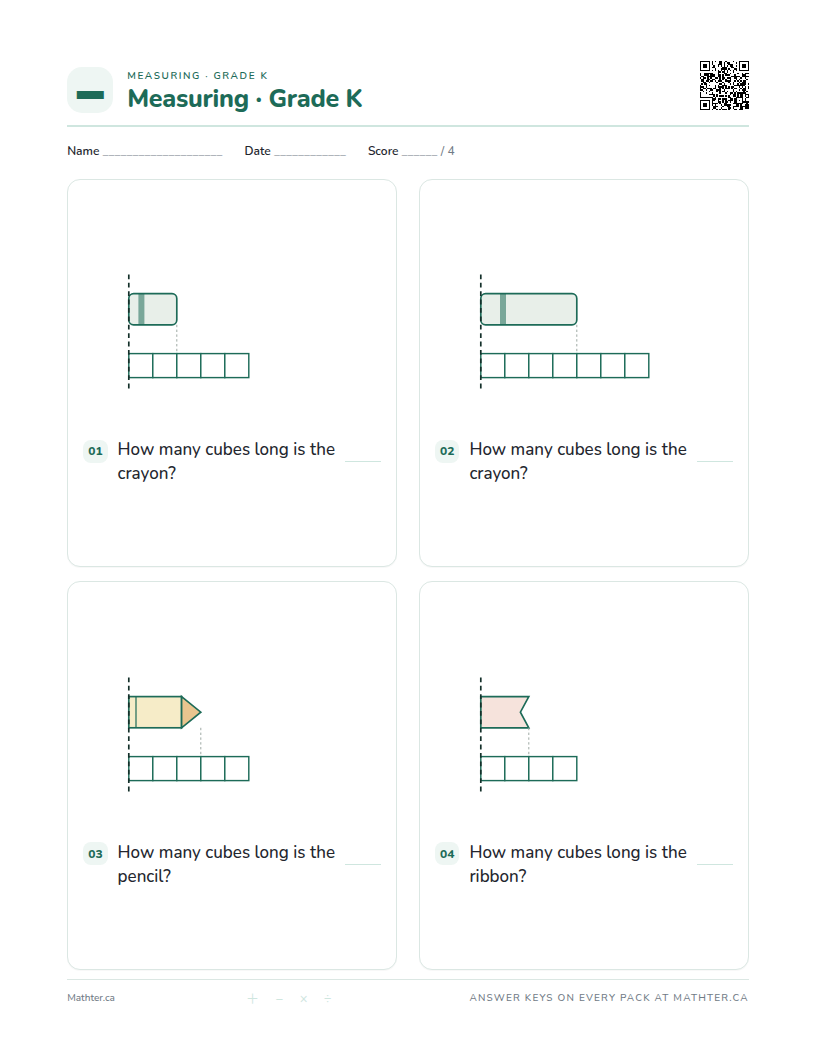
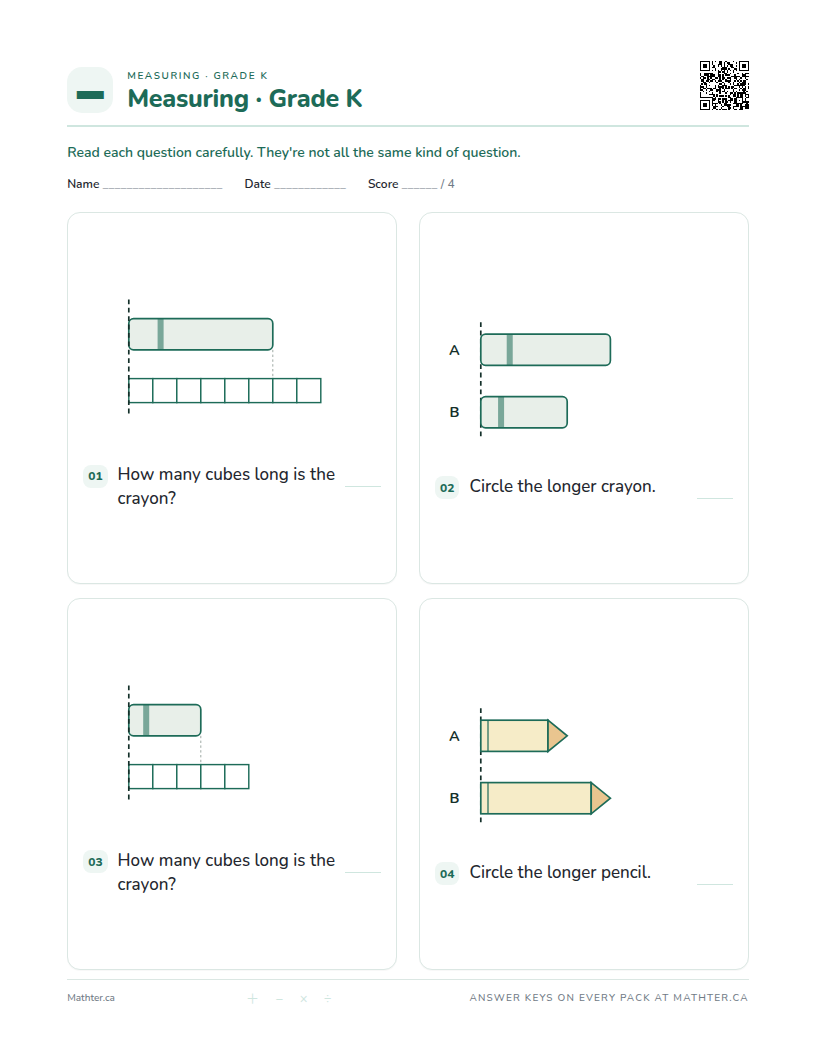
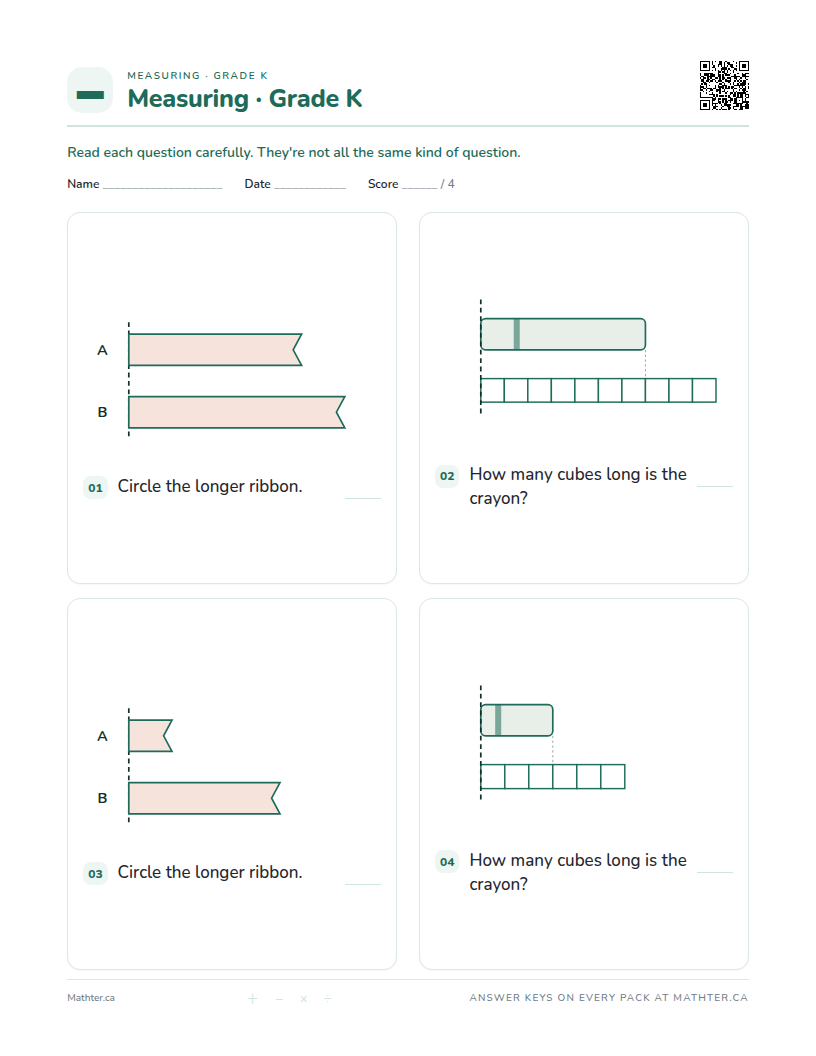
View these sheets in the designer
These three sheets are fixed, so you can bookmark or share them and get the same page back. Each one includes its answer key. Fresh numbers come with a free account.
Why Grade K measuring practice matters
Measuring with everyday objects, before a ruler ever enters the picture, builds the core idea behind all measurement — that length is a count of same-size units laid end to end — without the added complexity of reading a scale. Comparing and ordering lengths directly, without counting, is the next skill on the same path.
Grade K is where Mathter's measuring worksheets first appear. Grade 1 picks up from here with more advanced problems.
Want the full method, tips, and common mistakes? Read the Measuring Worksheets guide.
Frequently asked questions
- What's on a Grade K measuring worksheet?
- Each pack has up to 12 questions per page with a matching answer key, tuned to Grade K, with beginner, intermediate, and advanced options so a teacher, tutor, or parent can match the learner's level.
- What grade is non-standard measurement taught in?
- Kindergarten and Grade 1, as the foundation for measurement before students use a ruler.
- Why not just use a ruler for this?
- Non-standard units (pencils, ribbons, crayons) let students measure without needing to read a numbered scale yet, the concept of 'length = a count of units' comes first, the ruler comes after.
- What are the "which bar is longer" and "order the bars" questions?
- Questions that ask students to compare lengths directly by looking, without counting units, "which bar is longer" compares two bars (Kindergarten and up), "order the bars" arranges three from shortest to longest (Grade 1).
Make a Grade K measuring pack
Pick your options and print in seconds, with answer keys included.
Create free worksheetsFree to start · answer keys included · on a free account, your first 5 packs include Standard · no card required.